Snap Planets: Order, Meanings & How the Friend Solar System Works
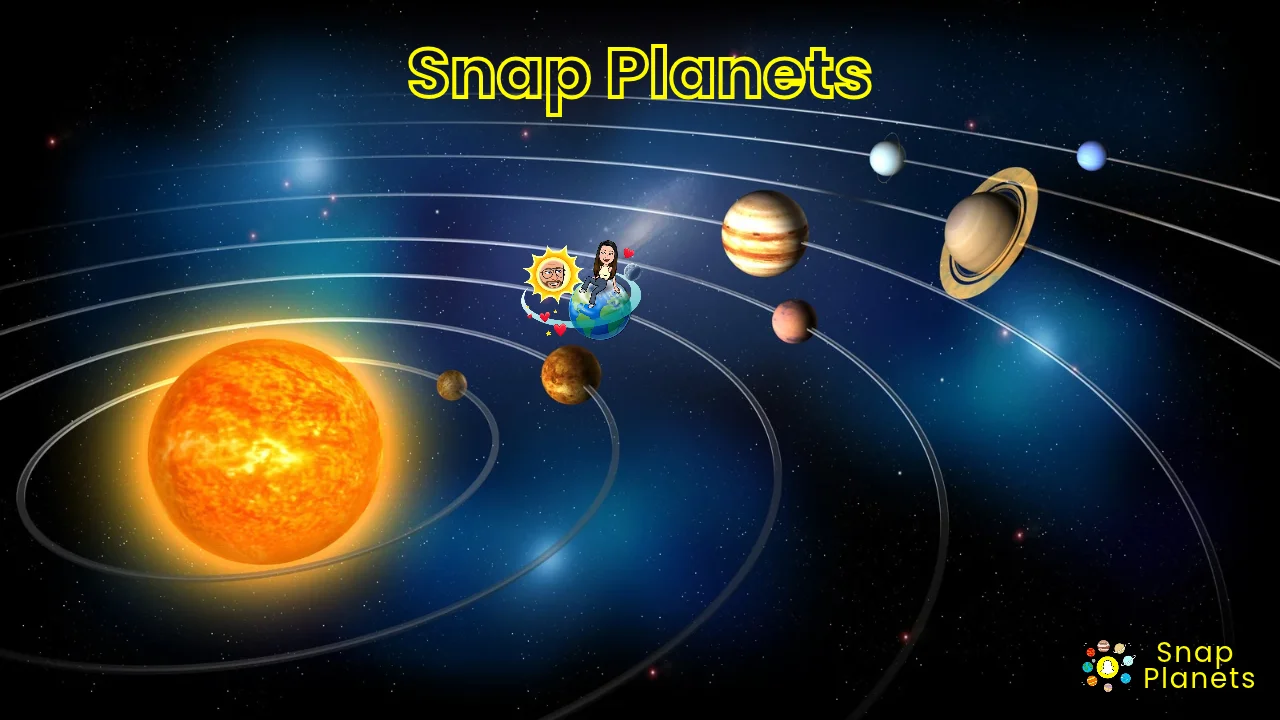
If you’ve ever opened a friend’s profile, noticed a gold-ringed badge, and wondered why a tiny planet appears around their Bitmoji, you’re looking at Snap planets. They are part of Snapchat’s Friend Solar System, a Snapchat+ feature that turns a Best Friends position into a visual planet. Mercury represents position #1, while Neptune represents position #8.
The confusing part is that a planet is not a simple measure of how much someone likes you. It represents your position in that person’s Snapchat Best Friends list. That distinction explains why your planet can change, why the same two people can have different positions in each other’s Solar Systems, and why claims about exact Snap, chat, or streak formulas should be treated carefully.
What Are Snap Planets?
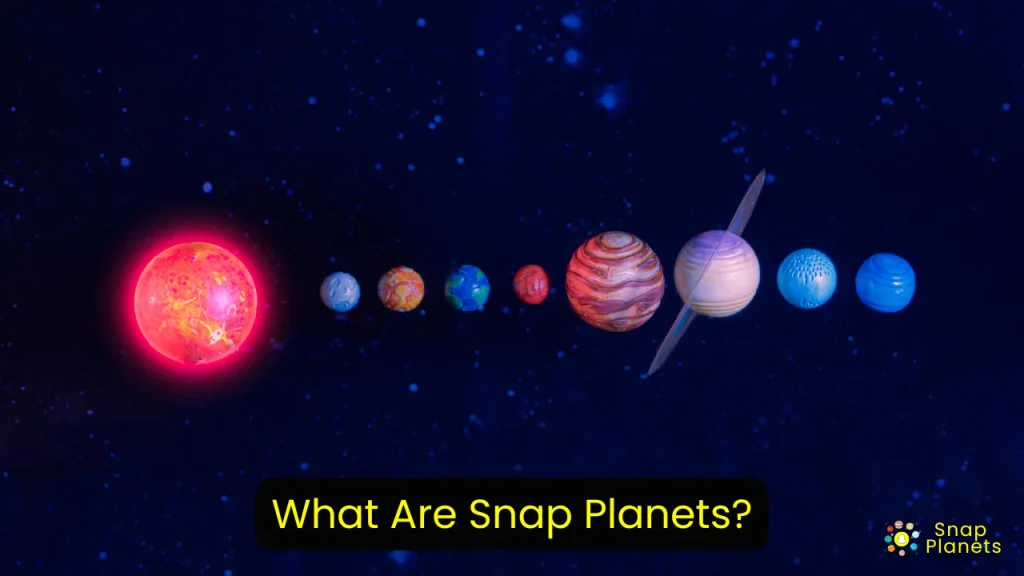
Snap planets are the eight planetary positions used by Snapchat’s Friend Solar System feature. The system represents the people in a Best Friends list using the same basic order as the real solar system: Mercury, Venus, Earth, Mars, Jupiter, Saturn, Uranus, and Neptune.
According to Snapchat’s own support information, Best Friends are the people you Snap and Chat with most, with up to eight people represented in the list. When you view a friend’s Friendship Profile and tap the relevant Best Friends or Friends badge, the feature can show which planet you are in their Solar System.
That last part matters.
The planet you’re shown is about your position in their list, not necessarily their position in yours.
For example, suppose you open Alex’s Friendship Profile and see yourself on Mercury. That means you occupy the #1 position in Alex’s Best Friends list. It does not automatically mean Alex is #1 in your list.
This is the simplest way to understand the feature:
The other person is the Sun, and your planet shows where you rank in their Snapchat Best Friends system.
Snapchat calls the feature Friend Solar System, but users commonly search for it using terms such as Snap planets, best friend planets on Snap, or planets on Snap meaning.
Snap Planets in Order
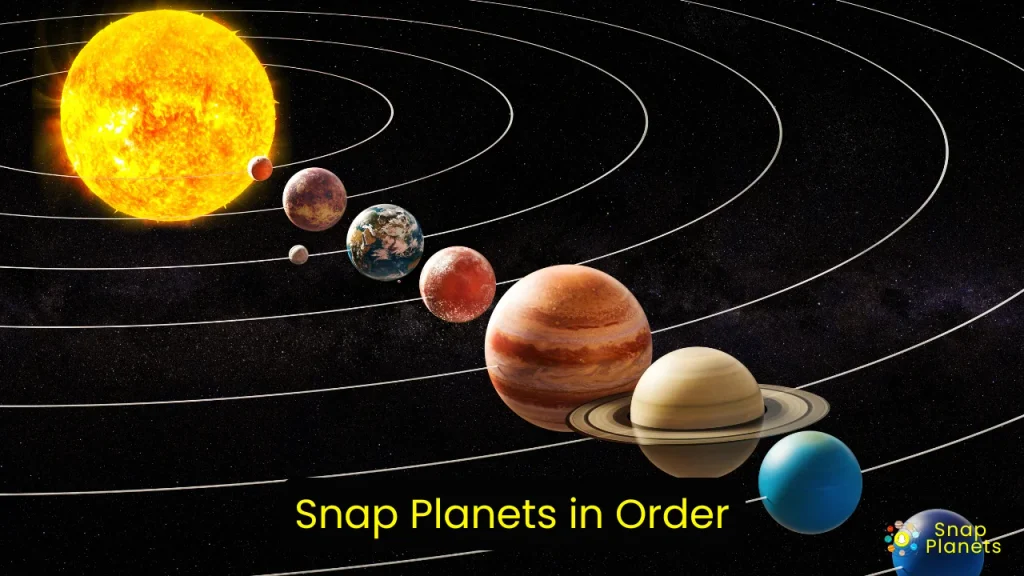
If you’re looking for the Snap planets in order, there are eight positions.
| Rank | Planet | Basic meaning |
| #1 | Mercury | You are #1 in their Best Friends ranking |
| #2 | Venus | You are #2 |
| #3 | Earth | You are #3 |
| #4 | Mars | You are #4 |
| #5 | Jupiter | You are #5 |
| #6 | Saturn | You are #6 |
| #7 | Uranus | You are #7 |
| #8 | Neptune | You are #8 |
So the complete Snap planets list is:
Mercury → Venus → Earth → Mars → Jupiter → Saturn → Uranus → Neptune
There is no Pluto position in the Friend Solar System.
The closer the planet is to the Sun in the planetary sequence, the higher the corresponding Best Friends position. However, don’t mistake the visual distance for a precise measurement of how much more someone interacts with one friend than another. Snapchat tells us what the positions represent, but it does not publish a public numerical score for each position.
What Do the Different Planets Mean on Snap?
The easiest way to understand what do the different planets mean on Snap is to treat each one as a rank rather than a different kind of friendship.
Mercury: #1
Mercury is the first position.
If your Bitmoji appears on Mercury in someone’s Solar System, you are currently #1 in that person’s Best Friends list.
This is the closest available position in the eight-planet system. It does not mean you’re necessarily that person’s closest friend in real life. It means your position within their Snapchat Best Friends system is currently #1.
Venus: #2
Venus represents position #2.
You’re in the second spot in that person’s Best Friends list. There is no official public score showing whether the gap between Mercury and Venus is tiny or substantial.
That’s important because two people could have very similar Snapchat activity while occupying different positions.
Earth: #3
Earth represents position #3.
You’re the third-ranked person in that person’s Best Friends system.
The planet’s familiar blue-and-green appearance is mainly part of the visual design. The important information is the ranking attached to Earth, not an additional emotional meaning assigned to the planet.
Mars: #4
Mars represents position #4.
You’re still within the eight positions represented by the Friend Solar System, but three people are currently ahead of you in that person’s Best Friends ranking.
Being Mars doesn’t mean the friendship is weak. It simply gives you a relative position based on activity represented by Snapchat’s system.
Jupiter: #5
Jupiter represents position #5.
Four people currently occupy higher positions in that person’s Best Friends list.
Jupiter is particularly useful to interpret correctly because some websites attach emotional descriptions to every planet. There is no need to do that. A planet is fundamentally a ranking indicator, not a personality or relationship label.
Saturn: #6
Saturn represents position #6.
You’re still among the eight positions represented by the system, but five people rank above you.
The ring around Saturn is a visual feature of the Friendmoji design. It doesn’t indicate another ranking category or a special friendship status.
Uranus: #7
Uranus represents position #7.
Only one represented position is below it: Neptune.
A Uranus position should not be interpreted as evidence that someone dislikes you or doesn’t value the friendship. It tells you where you currently sit in the Snapchat ranking.
Neptune: #8
Neptune represents position #8.
You’re at the outermost position in the eight-planet Friend Solar System.
This is one of the most misunderstood planets on Snap meaning questions. Neptune does not mean “they don’t like you,” “the friendship is over,” or “you’re barely friends.” It means you occupy the eighth position among the people represented by that person’s Best Friends system.
Best Friends List and Snap Planets: How Are They Connected?
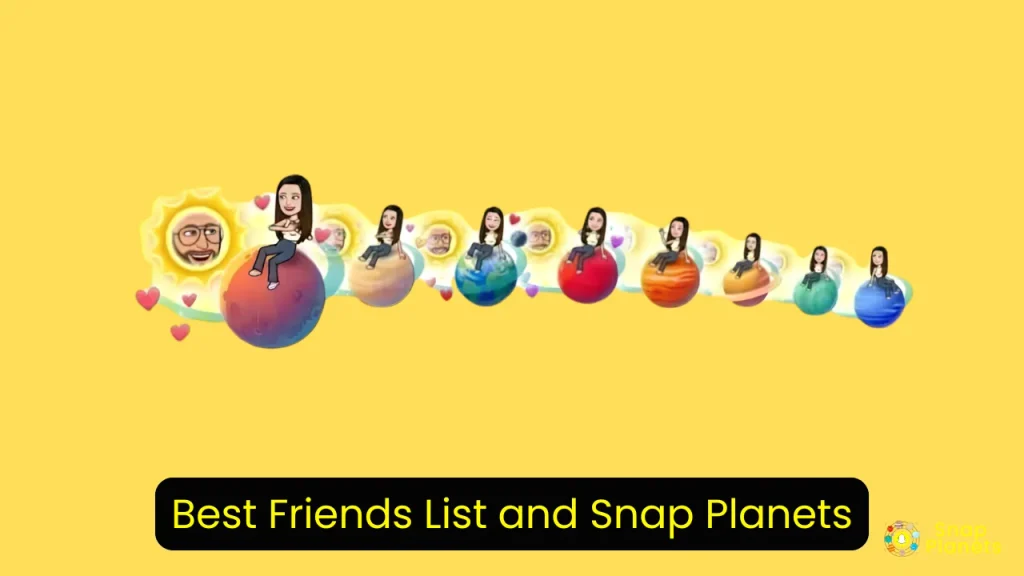
The best friends list Snap planets relationship is straightforward once you separate the two concepts.
The Best Friends list is the underlying ranking. The planets are the visual representation of positions within that ranking.
Snapchat says Best Friends are people you Snap and Chat with most. Its support documentation specifically describes the planet as representing a different position in the other person’s Best Friends list.
So:
Best Friends list = ranking system
Snap planets = visual representation of the ranking
This also explains why searching for Snap bsf list planets, Snap bff list planets, or Snap bsf list planets order usually leads to the same basic concept.
“BSF” and “BFF” are informal abbreviations people use for best friend. They do not create separate planet systems.
Best Friend Planets on Snap: Whose Ranking Are You Seeing?
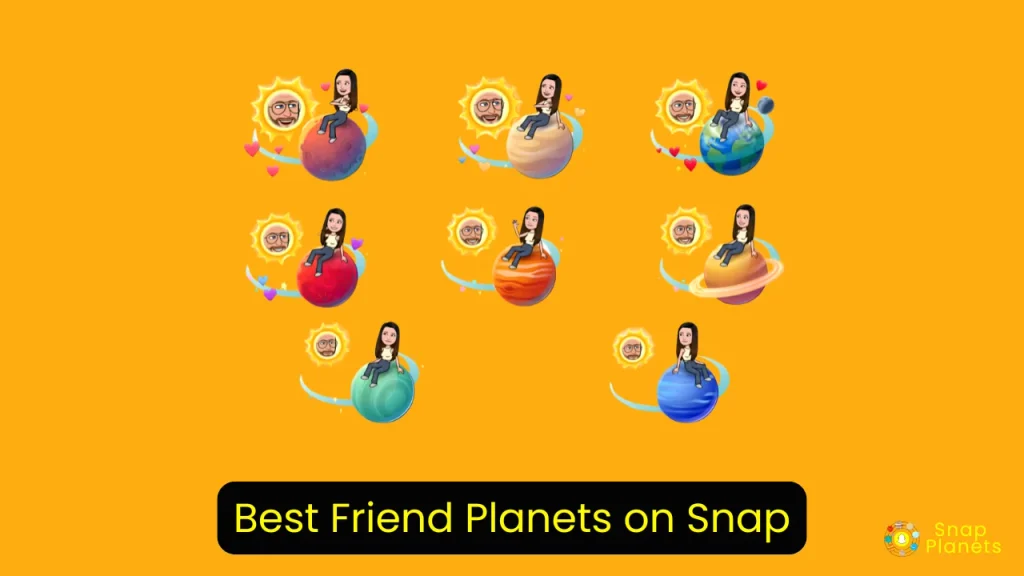
This is probably the most useful detail to understand before interpreting any planet.
Imagine two users: Sam and Taylor.
Sam opens Taylor’s Friendship Profile and discovers that Sam is Mercury.
That means:
Sam → #1 in Taylor’s Best Friends ranking
It does not tell Sam that Taylor is #1 in Sam’s ranking.
Now suppose Taylor checks Sam’s profile and appears as Jupiter.
That means:
Taylor → #5 in Sam’s Best Friends ranking
Both statements can be true at the same time.
This is because the ranking is directional, not a shared friendship score.
Can you be Mercury for someone while they are Neptune for you?
Yes.
Your position in another person’s Solar System and their position in yours can be completely different.
That is one of the most important pieces of information missing from many basic explanations of the feature.
What the Planets Mean on Snap vs. What They Don’t Mean?
A common mistake is to treat the planet as a complete relationship diagnosis.
It isn’t.
The planets on Snap meaning is much narrower: they show a position within the Snapchat Best Friends system.
They can tell you:
- Your relative position in another person’s Best Friends list
- Whether you’re within the eight positions represented by the Solar System
- Which planet corresponds to your current position
- How your position compares with the other represented positions
They cannot reliably tell you:
- How much someone likes you emotionally
- Whether you’re their closest friend offline
- How important you are in their real-world life
- Whether they prefer you over another person outside Snapchat
- The exact number of Snaps separating two positions
- The exact score behind your ranking
- Every factor Snapchat uses internally
This distinction prevents a lot of unnecessary overthinking.
Someone can be extremely important to you in real life while having a lower Snapchat position because you communicate differently on the app.
Does a Snap Planet Measure Your Friendship?
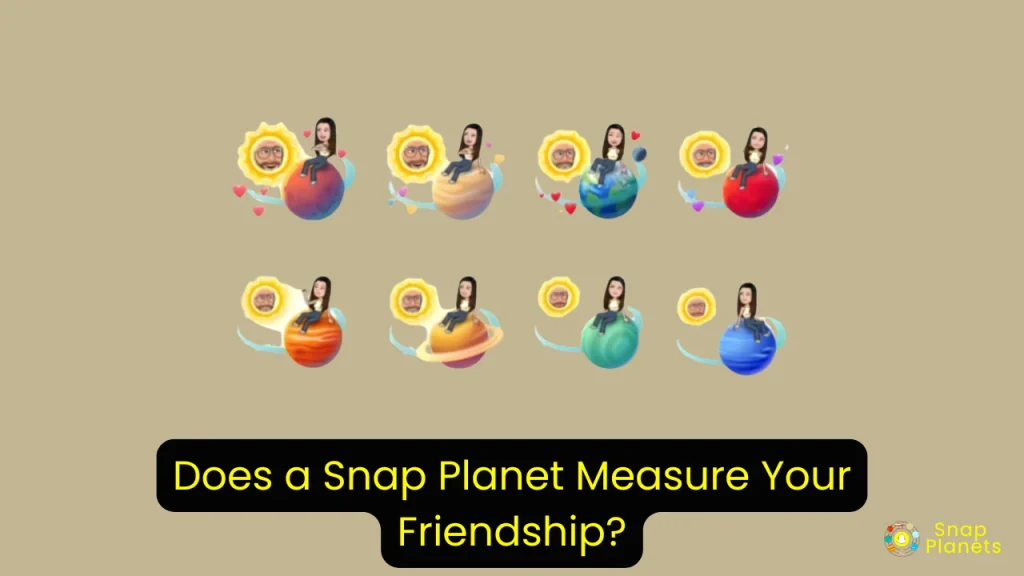
Not in the broad sense.
It measures or represents activity within Snapchat’s Best Friends system. Snapchat itself has described Best Friends in terms of people users communicate with most frequently and described the Solar System as illustrating how frequently one friend communicates with another.
That means a planet is better understood as a platform-specific interaction signal.
Consider two friends:
- You see one friend at school every day but rarely use Snapchat together.
- You exchange Snaps with another friend throughout the day.
The second person could rank higher in your Solar System even if you consider the first person your closer friend in everyday life.
Snapchat has also acknowledged that friendship rankings can have an emotional impact. The company made the Solar System optional and turned it off by default for first-time subscribers. That design decision is useful context: the company itself recognizes that a ranking inside an app should not be confused with the full value of a friendship.
Why Do Snap Planets Change?
Your planet can change because the underlying Best Friends ranking can change.
Suppose you are currently Mercury for someone. If your Snapchat interaction with that person decreases while their interaction with other friends changes, your relative position may move.
You could therefore move from:
Mercury → Venus
or:
Venus → Earth
without anything dramatic happening to the friendship itself.
The important word is relative.
You aren’t necessarily moving because Snapchat decided that your friendship suddenly became “less valuable.” Your position is changing relative to the other people in the system.
Does Snapchat publish the exact ranking formula?
No detailed public formula tells users exactly how every action translates into a planet position.
This is where a lot of online explanations become too confident.
You may see claims that assign exact percentages to:
- Snaps
- Chat messages
- Streaks
- Story replies
- Story reactions
- Calls
- Other interactions
Unless Snapchat officially documents such a weighting system, those numbers should not be presented as established facts.
The safer explanation is that Best Friends reflects the people you communicate with most, while the exact internal calculation behind each position is not publicly disclosed.
Do Snap Streaks Determine Your Planet?
A Snapstreak and a Best Friends ranking are related to Snapchat interaction, but they are not the same feature.
A streak represents consecutive days of exchanging Snaps. It doesn’t mean the person automatically becomes Mercury.
For example, you might have a very long streak with one person while exchanging a much larger volume of other Snapchat communication with someone else.
So a statement such as:
“The person with your longest streak is automatically Mercury”
should not be treated as an official rule.
The same applies to claims such as “100 streak days equals Mercury” or “a certain number of Snaps guarantees Venus.”
There is no public Snapchat formula that supports those exact calculations.
Snap Emojis, Planets, and Friendmoji Are Not the Same Thing
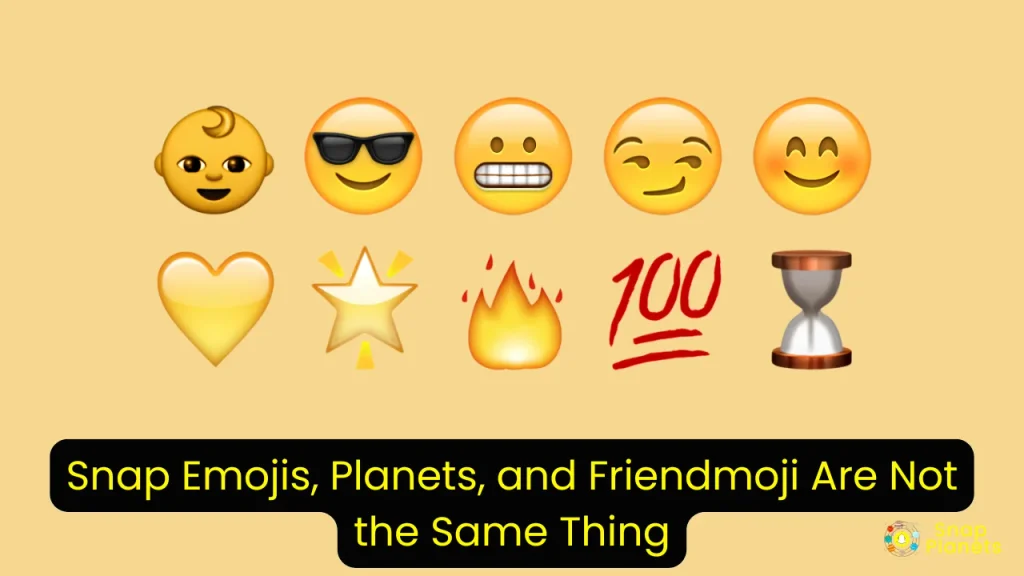
Searches for Snap emojis planets often combine several Snapchat features that are related but not identical.
Snapchat uses emojis and Friendmoji to communicate different types of information. Some emojis can indicate friendship relationships or streaks, while the planet system uses Friendmoji illustrations to represent positions in the Solar System.
The visual decoration around a planet can therefore help identify it, but it shouldn’t be treated as a separate ranking system.
For example, hearts around a planet do not create additional “heart levels” beyond the planet’s position.
The safest rule is:
Planet = position
Emoji = separate Snapchat indicator
Streak = consecutive Snap activity
These concepts can overlap in a profile but shouldn’t be treated as interchangeable.
What Are Snap Plus Planets?

Snap plus planets refers to the planets available through Snapchat+, the platform’s paid subscription.
The Friend Solar System is a Snapchat+ feature. Snapchat’s support documentation says subscribers can see a Best Friends badge with a gold ring on a friend’s Friendship Profile, and tapping that badge can show which planet the subscriber is in the other person’s Solar System.
One important detail is easy to miss: the Solar System is off by default for first-time subscribers. Snapchat says subscribers can turn it on through the Snapchat+ feature management page and can toggle it on or off.
That means subscribing to Snapchat+ doesn’t necessarily mean the Solar System will immediately appear.
What Are Snap Premium Planets?
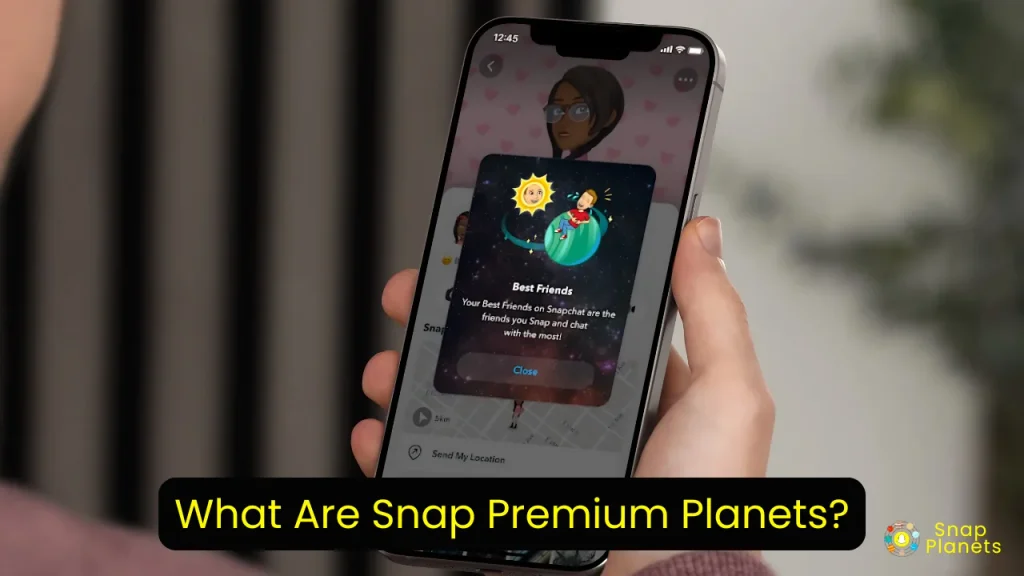
The phrase Snap premium planets is another way some users refer to the same Snapchat+ planet feature.
There isn’t a separate set of “premium planets” with different meanings.
The eight positions remain:
- Mercury
- Venus
- Earth
- Mars
- Jupiter
- Saturn
- Uranus
- Neptune
The distinction is access to the feature, not a different planetary ranking.
How to See Your Snap Planet?
If you have access to Friend Solar System, checking your position is relatively simple.
Step 1: Open a friend’s profile
Open Snapchat and go to the Friendship Profile of the person whose Solar System you want to check.
Step 2: Look for the relevant badge
Depending on the relationship shown in the app, you may see a Best Friends or Friends badge with a gold ring.
Step 3: Tap the badge
Snapchat’s support instructions say tapping the badge shows which planet you are in that person’s Solar System.
Step 4: Identify the planet
Your Friendmoji will appear on one of the eight planets.
Then compare it with the ranking table:
Mercury = #1
Venus = #2
Earth = #3
Mars = #4
Jupiter = #5
Saturn = #6
Uranus = #7
Neptune = #8
If you cannot see the feature, check whether you have Snapchat+, whether Friend Solar System is enabled, and whether the relevant profile displays the necessary badge.
Why Can’t I See the Planets?
There are several straightforward reasons.
You don’t have Snapchat+
Friend Solar System is a Snapchat+ feature.
Solar System is turned off
Snapchat says the feature is off by default for first-time subscribers. Check the Snapchat+ feature management area and make sure it is enabled.
The relevant profile doesn’t show the feature
The planet is accessed through the relevant Friendship Profile and badge. If the expected badge isn’t present, the Solar System may not be available for that particular relationship or account state.
The app interface has changed
Social apps frequently update menus and profile layouts. If an older guide tells you to use a setting that no longer appears in exactly the same place, rely on Snapchat’s current in-app labels and support documentation rather than an old screenshot.
This is one reason content about platform features needs regular factual review.
Best Friends vs. Friends Badge
Another source of confusion is the difference between the Best Friends and Friends labels.
The planet itself is about your position in another person’s Solar System. The badge context can provide information about whether the friendship ranking is mutual at the relevant level.
Don’t assume that seeing a planet means both people occupy identical positions in each other’s rankings.
For example:
You may be high in their ranking while they are lower in yours.
That is completely consistent with the directional nature of the feature.
Can Someone See Your Planet?
Snapchat describes Friend Solar System as an optional, private feature. Its newsroom has specifically said the Solar System does not show the other friends in the system, is not a numerical ranking, and is not visible to other people.
That means it shouldn’t be interpreted as a public leaderboard.
The feature is designed to give the user additional context about their own friendship position rather than publish someone’s complete ranked friend list.
This is an important privacy distinction:
Seeing your planet is not the same as seeing someone’s entire Best Friends list.
A Better Way to Interpret Your Planet
The healthiest way to use the feature is as a Snapshot of your Snapchat activity.
If you’re Mercury, enjoy knowing that you currently occupy the top position in that person’s Snapchat ranking.
If you’re Neptune, don’t automatically interpret it as rejection.
If your planet changes, don’t assume the friendship itself has changed in the same proportion.
A platform ranking can reflect behavior without capturing context.
Someone may message you more frequently on Snapchat because it’s convenient. Another friend may rarely use Snapchat but still be one of your closest people offline.
The planet knows only what the platform’s system can use. It doesn’t know the entire relationship.
Common Snap Planets Myths
“Mercury means you’re their best friend in real life.”
Not necessarily. Mercury means #1 in the relevant Snapchat Best Friends ranking.
“Neptune means they don’t care about you.”
No. Neptune represents position #8 in the system.
“Your planet must be the same in both directions.”
No. Rankings are individual to each person’s Solar System.
“A long streak automatically makes you Mercury.”
There is no official rule saying that.
“Snapchat publishes the exact planet formula.”
Snapchat explains what the feature represents, but it does not provide users with a detailed public formula for calculating every position.
“The planets reveal someone’s entire Best Friends list.”
They do not. The Solar System is designed to show your position, not expose the full ranked list of another person’s friends.
“There are nine planets because Pluto should count.”
The Friend Solar System uses eight planets, from Mercury through Neptune.
Snap BSFL Planets and Other Search Terms Explained
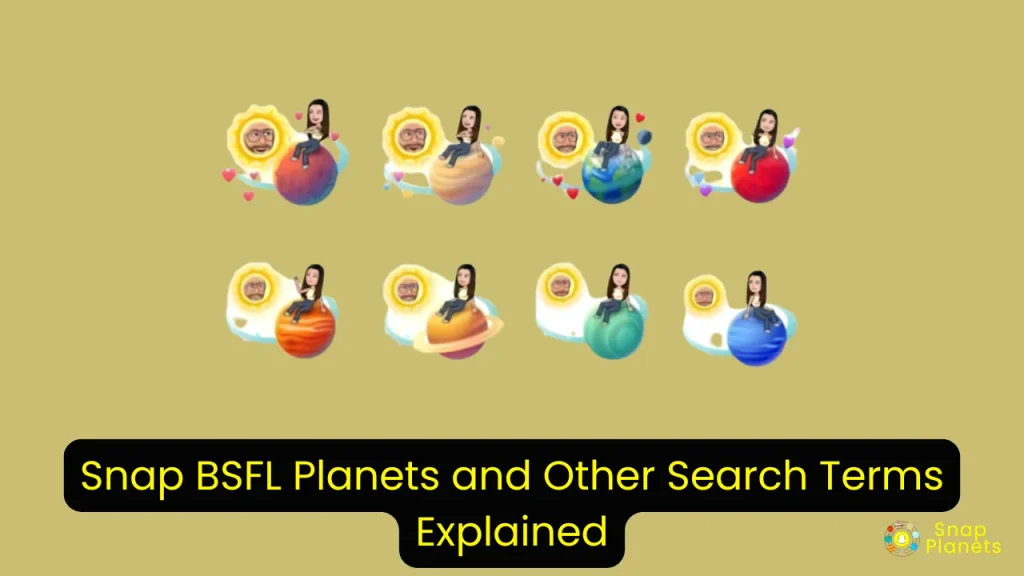
People don’t always search for the feature using the same wording.
You may see phrases such as Snap bsfl planets, Snap bff planets, Snap bff list planets, or Snap planets bsf list.
These searches generally point toward the same underlying idea: the planet-based representation of positions in Snapchat’s Best Friends system.
Likewise:
- Snap planets list usually means the eight planets in ranking order.
- Snap bsf list planets order usually means the order from Mercury to Neptune.
- best friend planets on Snap refers to the same Friend Solar System positions.
- Snap plus planets refers to the Snapchat+ availability of the feature.
- Snap premium planets is another informal description of the paid-feature version.
- Snap emojis planets generally refers to the visual Friendmoji and emoji elements associated with the planet display.
Using different search terms does not mean Snapchat has multiple separate planet systems.
The Most Important Thing to Remember
If you remember only one rule about Snap planets, make it this:
Your planet tells you where you rank in another person’s Snapchat Best Friends system; it does not define your entire friendship with that person.
Mercury is #1 and Neptune is #8. The positions in between follow the ordinary planetary order.
Your position can change because the underlying ranking can change. You can have a different planet in each friend’s Solar System. A streak doesn’t automatically determine your planet, and no reliable public formula lets you calculate an exact position from a specific number of Snaps or messages.
That approach gives you a much more accurate understanding of what the feature is actually showing.
Frequently Asked Questions
What is the order of Snapchat planets?
The Snapchat planets in order are Mercury, Venus, Earth, Mars, Jupiter, Saturn, Uranus, and Neptune. They represent positions from first to eighth in a person’s Snapchat Best Friends list.
How to access Snapchat planets?
To access Snapchat planets, you need Snapchat+ and a Friendship Profile with another user. Tap the Best Friends badge with the gold ring to see which planet represents your position in their Solar System.
How do Snapchat planets work?
Snapchat planets are part of the Snapchat Solar System feature. The Sun represents your friend, while your Bitmoji appears on a planet based on your position among their closest Snapchat friends.
What are the requirements for Snapchat planets?
The Snapchat planets feature requires a Snapchat+ subscription and must be enabled in your Snapchat+ feature settings. The Solar System is turned off by default for first-time Snapchat+ subscribers.
What do the planets represent in Snapchat?
Each planet represents a different position in the Snapchat Best Friends list planets system. Mercury is the closest position, while Neptune represents the eighth position, with the planets ordered between them.
What does Snapchat planets meaning tell you about a friendship?
The Snapchat planets meaning is mainly about your position in another person’s Best Friends ranking. A closer planet generally means you interact with that person more frequently on Snapchat, but it does not measure how close you are offline.
What are Snapchat planets in order for Best Friends?
The Snapchat planets in order for Best Friends are Mercury, Venus, Earth, Mars, Jupiter, Saturn, Uranus, and Neptune. The position is specific to each person, so your planet in someone’s Solar System may differ from their planet in yours.
Conclusion
Snap planets give Snapchat+ users a simple visual way to understand their position in another person’s Best Friends ranking, with Mercury representing #1 and Neptune representing #8. The planets can change as Snapchat activity and rankings change, but they should be viewed as an in-app ranking rather than a complete measure of friendship or personal closeness.
Understanding the direction of the ranking also clears up common confusion: you can be Mercury in someone’s Solar System while they hold a different planet in yours. Since Snapchat does not publish a precise ranking formula, it’s best to rely on the official planet order and Friend Solar System information instead of treating unofficial Snap, chat, or streak calculations as fact.